
The difference between PPM and TDS matters when a Saudi hotel, café, office or beverage site is testing water before choosing filtration, softening or reverse osmosis. PPM is a unit used to express concentration. Total dissolved solids, or TDS, is a measurement category covering dissolved material in the water. A handheld meter can estimate TDS, but it cannot identify the dissolved substances or replace a representative laboratory analysis.
This guide explains how commercial teams can interpret field readings, choose sample points and write a treatment brief based on what reaches the equipment, not on one number taken from an unknown tap.
TL;DR
- PPM is a concentration unit. TDS describes the combined dissolved load reported in that unit.
- A conductivity meter estimates TDS using a conversion factor, so the displayed value depends on the meter and the ionic mixture.
- Hardness is not the same as TDS. Calcium and magnesium drive most scale decisions, while TDS includes a broader mixture of dissolved ions.
- Sample the incoming supply, the outlet from site storage and the proposed equipment inlet when those points can differ.
- Choose treatment only after combining water chemistry with demand, flow, pressure, temperature and the required outlet quality.
In this article
- What PPM and TDS actually mean
- Why a conductivity meter gives an estimate
- Follow the Saudi site water route before sampling
- Read TDS beside hardness and the wider chemistry
- Match the test pattern to the treatment route
- Apply the results to Saudi commercial equipment
- Turn the analysis into commissioning evidence
- Frequently asked questions
What PPM and TDS actually mean
Parts per million describes concentration. In dilute water analysis, a result expressed as milligrams per litre is often numerically close to a result expressed as PPM, but the laboratory report and method remain the authority for the result.
TDS is the combined mass of dissolved inorganic and organic material left after the water is processed by the stated analytical method. It is not the name of one contaminant. Sodium, chloride, sulphate, bicarbonate, calcium and magnesium can all contribute to the total.
Saudi Water Authority material treats TDS, electrical conductivity, pH and hardness as separate physical and chemical parameters within water-quality analysis.[1] That separation is useful for buyers: two sites can record a similar TDS value while having different scale potential, taste, corrosion behaviour or treatment requirements.
A TDS result can therefore answer, “How large is the broad dissolved load?” It cannot answer, “Which dissolved substances are present?” or “Will this water form scale in my equipment?” without supporting chemistry.
| Reading | What it tells the buyer | What it does not prove |
|---|---|---|
| PPM | The unit used for a concentration result | Which parameter was measured |
| TDS | The broad dissolved-solids load | The identity of each ion |
| Conductivity | How readily the water carries electrical current | A direct laboratory TDS result |
| Total hardness | Mainly calcium and magnesium scale potential | The full dissolved-solids profile |
| pH and alkalinity | Acid-base condition and buffering | Whether one treatment stage is sufficient |
Why a conductivity meter gives an estimate
A handheld TDS meter normally measures electrical conductivity and converts that reading into an estimated TDS value. The conversion is convenient for trend checks, but it is not universal. Different dissolved ions conduct electricity differently, temperature affects conductivity, and meters may use different factors.
US Geological Survey guidance explains that specific conductance can be related to dissolved-solids concentration, but the relation should be established for the water being assessed rather than treated as one fixed conversion for every source.[2] This is why two instruments can show different TDS values from the same sample even when neither is faulty.
For commercial use, record:
- the raw conductivity reading and its unit;
- the displayed TDS result and the meter's conversion factor;
- sample temperature or automatic temperature-compensation status;
- instrument model, calibration solution and calibration date;
- the exact sampling point and operating condition.
Use the meter to compare repeat readings from the same route and method. Use laboratory analysis where the decision depends on mineral balance, a named substance or an acceptance limit. A field meter is most useful as a consistent screening tool, not as a complete specification.
Follow the Saudi site water route before sampling
The useful sample is the water that the proposed system will treat. In a Saudi commercial building, that may not be identical to a general supply report or a reading taken at the easiest washroom tap.
Draw the route from the incoming connection through any break tank, storage tank, booster set, pressure zone and existing treatment to the protected equipment. Mark low-use branches and any alternative supply route. Saudi Water Authority guidance presents quality control as a value-chain responsibility from production and transmission through distribution and consumer-side use.[1]
A practical sampling plan can use three levels:
- Incoming supply: establishes the baseline before site storage and internal distribution.
- After storage or boosting: shows what leaves the route used during normal operation.
- Proposed treatment inlet: defines the chemistry and hydraulic condition the new system must handle.
Add a point of use only when it answers another question, such as whether a long branch or existing cartridge changes the result. Do not combine locations in one bottle. Record tank level, occupancy, recent shutdowns and whether pumps were operating normally.
For chemical or microbiological analysis, use a laboratory whose accredited scope covers the required parameter and method. The Saudi Accreditation Center provides a directory of accredited conformity-assessment bodies, but buyers still need to check the specific scope rather than relying on the word “accredited” alone.[3]
Read TDS beside hardness and the wider chemistry
A high or changing TDS reading can justify a closer look, but it does not automatically justify reverse osmosis. Likewise, a moderate TDS value does not rule out hardness-related scale.
Select the panel around the application:
- Total hardness as CaCO3: for scale risk and softening decisions.
- Conductivity and TDS: for dissolved-load trends and membrane assessment.
- pH and alkalinity: for stability, buffering and treatment compatibility.
- Chloride, sulphate and sodium: for wider mineral balance, taste and material considerations.
- Turbidity or suspended solids: where particles, tank deposits or cartridge loading are concerns.
- Residual disinfectant: where taste, carbon treatment or downstream equipment compatibility matters.
- Targeted microbiology: where the site water-safety plan identifies a hygiene question requiring specialist sampling.
The panel should answer the purchase decision. Ordering every available parameter adds noise; ordering only TDS can hide the reason for the result.
A hotel protecting hot-water equipment needs hardness, demand and temperature. A coffee operation needs the equipment manufacturer's water requirements as well as hardness, alkalinity and dissolved load. A beverage line may need repeatable inlet chemistry and tighter outlet targets. An office drinking-water point may focus more on taste, sediment and serviceability.
Match the test pattern to the treatment route
Treatment should follow the measured pattern rather than a preferred product.
| Test pattern | Route to assess | Important checks before selection |
|---|---|---|
| Hardness is the dominant issue | Ion-exchange softening | Peak flow, daily demand, regeneration and continuity |
| Chlorine, taste or odour is the defined issue | Activated carbon | Contact time, flow, cartridge or media change criteria |
| Turbidity or suspended solids is confirmed | Sediment or depth filtration | Particle loading, pressure loss and cleaning or backwash duty |
| Broad dissolved load must be reduced | Reverse osmosis | Feed chemistry, recovery, pretreatment, storage and reject-water route |
| Hygiene risk is identified | Site-specific control plan | Specialist sampling, system design and verification responsibility |
Where measured hardness drives the decision, the Regal 250 water softener is one compact commercial option to assess against flow, demand and regeneration conditions.
Where chlorine, taste or odour is the issue, the Regent Carbon 3072 illustrates an activated-carbon route. It should still be sized from the actual duty and verified outlet target.
Confirmed suspended solids may point towards a depth-filtration stage such as the Regent Sediment 3072, subject to flow, pressure and loading.
Where analysis supports dissolved-solids reduction, the Majestic RO is a commercial membrane route to assess alongside pretreatment, output demand and storage.
These examples are not substitutes for a treatment calculation. The same TDS number can lead to a different design when hardness, chloride, alkalinity, temperature or required outlet quality changes.
Apply the results to Saudi commercial equipment
For espresso and batch-brew equipment, start with the manufacturer's inlet-water limits. Hardness and alkalinity affect scale and extraction differently, so a TDS target alone is not a coffee specification.
For ice machines, combi ovens and steam equipment, sample the exact feed route. Record peak demand and inlet pressure while the kitchen is operating. A chemically appropriate treatment stage can still fail if it cannot sustain flow.
For hotels and offices with central storage, compare the incoming baseline with the tank or booster outlet. A difference tells the facilities team to investigate the site route before placing a treatment system downstream and expecting it to correct every upstream problem.
For beverage operations, define the acceptable inlet range and outlet target for each parameter that affects consistency. Trend readings taken with the same instrument are useful, but acceptance should use the agreed analytical method.
Turn the analysis into commissioning evidence
Send potential suppliers one written brief containing:
- sampling locations, dates, methods and laboratory details;
- typical, minimum and maximum inlet results where available;
- required outlet quality for the named equipment or application;
- daily demand, peak and sustained flow;
- static and minimum dynamic pressure;
- operating hours and allowable interruption;
- available space, power, drainage and access;
- monitoring, consumable and maintenance expectations;
- commissioning sample points and acceptance criteria.
Ask what each proposed stage changes, which inlet conditions its performance assumes and how exhaustion or loss of performance will be identified. “Reduce PPM” is not a complete acceptance criterion. State whether the target is hardness, TDS, chloride, chlorine, turbidity or another named parameter.
Commission under representative flow. Record the pre-treatment and post-treatment results, instrument details, settings and initial pressure readings. Those records become the baseline for maintenance and fault finding.
Frequently asked questions
1. What is the difference between PPM and TDS?
PPM is a unit of concentration. TDS is the combined dissolved-solids measurement that may be reported in PPM or milligrams per litre.
2. Does a TDS meter measure every dissolved substance?
No. It normally measures conductivity and converts it into an estimate. It does not identify individual ions or contaminants.
3. Is TDS the same as hardness?
No. Hardness mainly reflects calcium and magnesium, while TDS includes a broader range of dissolved material.
4. Where should a Saudi commercial site take its main sample?
At the proposed treatment inlet during normal operation. Add incoming and post-storage samples when the route could change the water.
5. Does a high TDS reading mean reverse osmosis is required?
Not by itself. Confirm the dissolved profile, outlet requirement, demand and alternative treatment routes first.
6. Can a supply report replace site testing?
It is a useful baseline, but it may not represent conditions after the site's tanks, pumps, pipework or existing treatment.
7. Should coffee equipment be specified from TDS alone?
No. Use the equipment requirements and assess hardness, alkalinity and relevant dissolved ions alongside TDS.
8. What should be checked after installation?
Verify the named outlet targets at representative flow, then retain the readings as the maintenance baseline.
Talk to Sovereign Water about a Saudi commercial water brief
Send the application, water-route sketch, representative results, demand, flow, pressure and target outlet quality. Sovereign Water can use that evidence to discuss an appropriate treatment route.
Sources
[1] https://swa-cdn.swa.gov.sa/Reports/unbottled_drinking_water_quality_standards_in_the_kingdom_of_saudi_arabia_report_2025.pdf: Saudi Water Authority, Unbottled Drinking Water Quality Standards in the Kingdom of Saudi Arabia, 2025
[2] https://pubs.usgs.gov/tm/09/a6.3/tm9-a6_3.pdf: US Geological Survey, Specific Conductance, Techniques and Methods 9-A6.3
[3] https://saac.gov.sa/en/accredited-cabs: Saudi Accreditation Center, Accredited Bodies
Products mentioned in this article
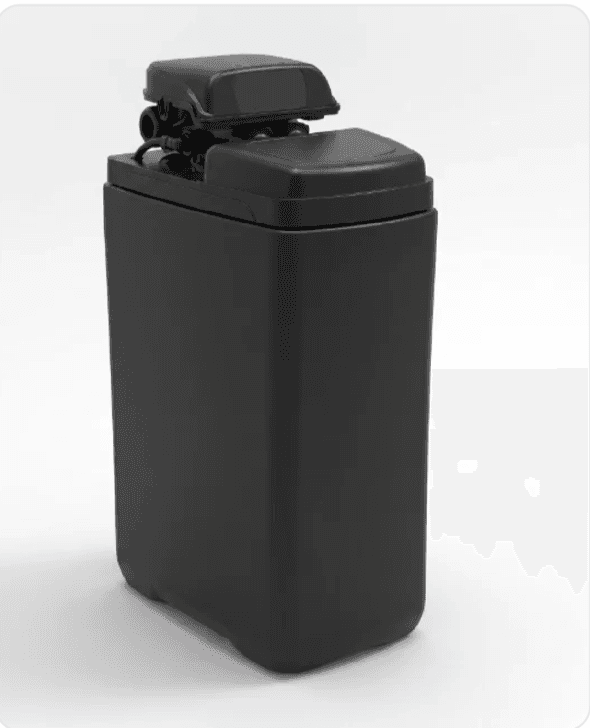
Compact, efficient softening for larger homes and small commercial sites: up to 3 m3 per hour with up-flow…
View product →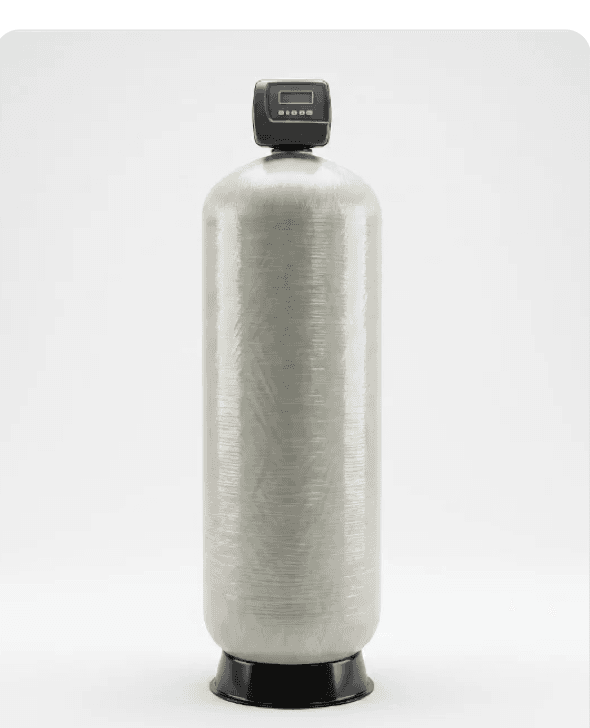
A single 30 x 72 inch activated carbon filter on a metered CE 1.5 inch control valve, holding a 180 kg Centaur bed…
View product →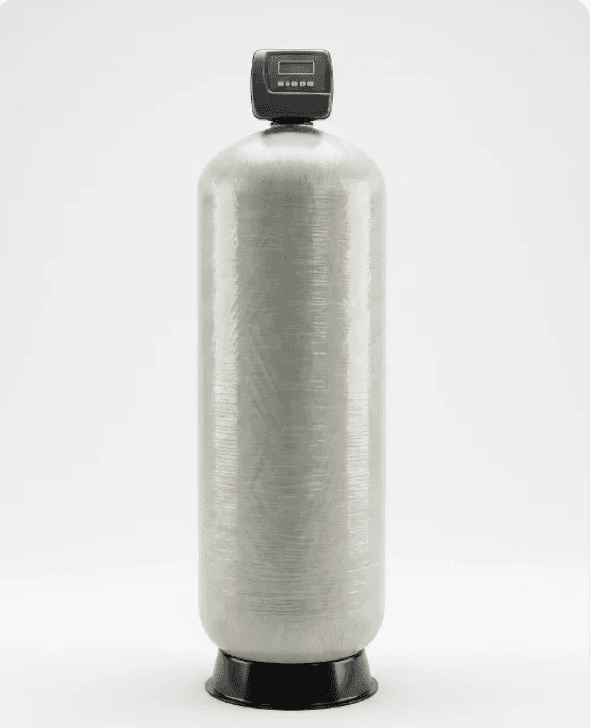
A single 30 x 72 inch auto-backwash depth filter on a metered CE 1.5 inch control valve, carrying 367.9 litres…
View product →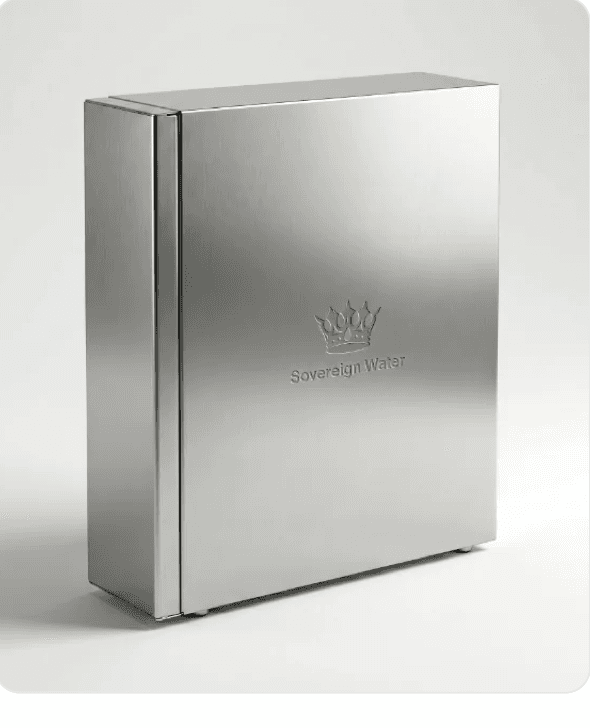
High-flow commercial reverse osmosis for high-volume food & beverage: up to 185 litres of crystal-clear purified…
View product →