
Most Saudi offices start with a bottled water dispenser. It needs no plumber, the supplier drops off a stack of 19-litre bottles and the team has cold water by lunchtime. Over a year, though, those bottles become a steady line on the budget, a corner of the storeroom and a job for whoever is strong enough to lift them. This guide looks at what a bottled water dispenser really costs a business in Riyadh, Jeddah or Dammam, how a mains-fed unit compares, and how to work out the numbers for your own site.
TL;DR
- A bottled water dispenser has a low start-up cost, but you pay again for every bottle.
- A mains-fed dispenser connects to your building's supply and treats the water at the unit, so the ongoing cost is filters and servicing.
- In Saudi heat, how and where bottles are stored matters as much as the cooler itself.
- Mains-fed treatment must suit your local supply, whether it comes from the network, a building tank or a tanker.
- Bottled still suits site cabins, short leases and places far from a water pipe.
Thinking about moving your office off bottles? Talk to Our Team and we will review your usage and building with you.
In this article
- What a bottled water dispenser really costs a Saudi office
- How a mains-fed dispenser changes the sums
- Your water supply decides the treatment
- Matching the dispenser to each part of the building
- Heat, storage and hygiene
- A simple way to compare your own costs
- How the switch from bottles works
- Questions to put to any supplier
- Where bottled still fits
- Frequently asked questions
What a bottled water dispenser really costs a Saudi office
The price of the bottle is only part of it. A bottled water dispenser brings a chain of smaller costs that rarely show on one invoice.
| Cost | What it looks like day to day |
|---|---|
| Bottles | Charged per bottle, so the bill follows how much people drink |
| Deliveries | Scheduling drivers, gate passes and someone to receive them |
| Deposits or rental | Often charged on bottles and the cooler itself |
| Storage | Floor space for full bottles and returned empties |
| Staff time | Counting stock, ordering, lifting and swapping bottles |
| Gaps in supply | Staff without water when stock runs out before the next drop |
In summer, offices drink more, so the bottled bill rises exactly when the rest of the building is costing more to cool. Our guide to how much a water cooler costs to run in Saudi Arabia shows the running costs that sit behind each type.
How a mains-fed dispenser changes the sums
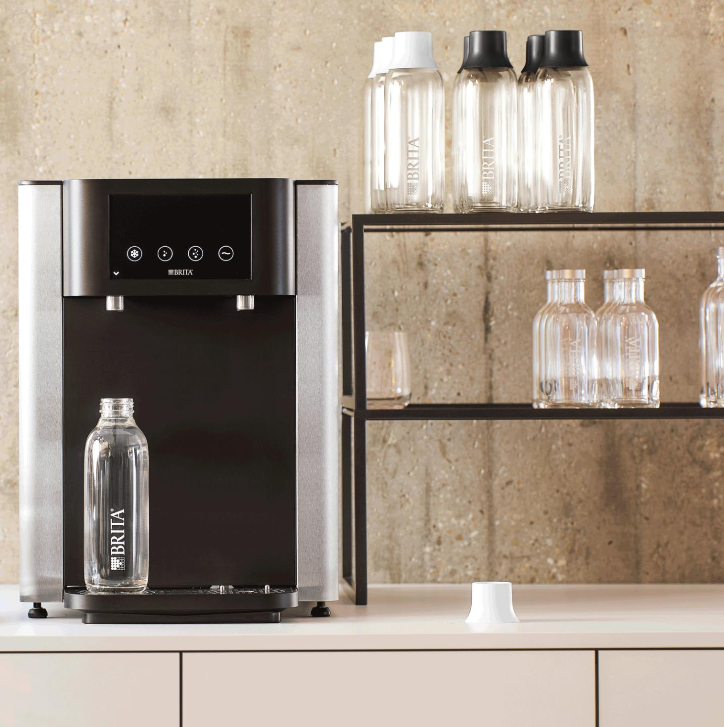
A mains-fed dispenser is plumbed into the cold water line. Water passes through filtration, and where needed further treatment, before it is chilled, heated or carbonated on demand. There are no bottles to buy, carry or store.
The cost pattern flips. You pay more at the start for the unit and the installation. After that, you pay for filter changes and planned servicing, which stay the same whether your team is 20 people or 60. For a busy office with steady daily use, that fixed cost is what usually makes mains-fed the cheaper choice over a few years.
For rental and contract options, see our water cooler rental cost guide for Saudi Arabia.
Your water supply decides the treatment
Saudi buildings do not all get their water the same way, and that changes how a mains-fed unit should be specified.
According to Arab News (5 January 2025), desalinated water made up 50% of the water distributed in the Kingdom in 2023. The rest comes largely from groundwater, and the Saudi Water Authority oversees desalination and supply. Many commercial buildings also store water in roof or ground tanks, and some sites rely on tanker deliveries.
| Supply type | What to plan for |
|---|---|
| Network water, mainly desalinated | Good filtration for taste and to protect the unit |
| Network water with a groundwater share | Scale protection may be needed for hot and sparkling options |
| Building storage tank | Tank cleaning matters as much as the dispenser |
| Tanker-filled tank | Treatment chosen to match the tank and supply |
This is why a mains-fed unit is never one-size-fits-all. A site survey (a paid visit) looks at the supply and the space before we recommend a model.
Want a mains-fed option priced for your building? Request a Quote.
Matching the dispenser to each part of the building
A Saudi office rarely needs the same unit everywhere. Match the format to how each space is used.
| Space | Suitable mains-fed option | What to check |
|---|---|---|
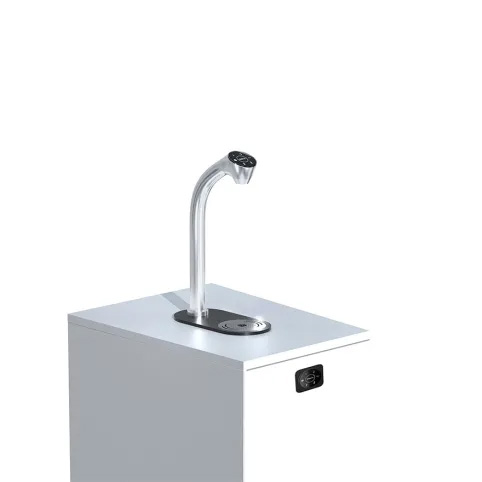
| Main pantry | Worktop tap with an under-counter unit for chilled and boiling water | Cupboard space below the counter |
| Open office floor | Floor-standing mains-fed dispenser | A water point within reach of the chosen spot |
| Reception or majlis | Compact countertop unit | A neat look for guests |
| Meeting rooms | Small tap or dispenser close by | Staff no longer carry bottles between rooms |
| Warehouse or workshop | Sturdy floor unit or bottle filler | Dust and heavy daily use |
| Project site office | Bottled, until the building is handed over | No permanent supply yet |
Heat, storage and hygiene
A bottled water dispenser depends on bottles being kept well before they reach the cooler. In Saudi conditions that is a real concern. Bottles left in a hot loading bay, a vehicle or near a window are harder to keep in good condition. Each swap also opens the water path to the room, and the cooler's reservoir needs regular cleaning.
A mains-fed unit treats the water at the point of use and has no bottle to change, so the water path stays closed. It still needs looking after. Filters must be changed on time and the unit sanitised at each visit, which is why we pair every installation with planned maintenance.
There is also the lifting. A full 19-litre bottle weighs about 19 kg. Taking that task away from office staff is one of the most common reasons Saudi facility teams give for switching.
A simple way to compare your own costs
Use last year's paperwork rather than estimates.
| Step | What to do |
|---|---|
| 1 | Total your bottled spend for the last 12 months, including delivery, deposits and rental. |
| 2 | Get a written yearly figure for a mains-fed unit's filters and servicing. |
| 3 | Subtract step 2 from step 1 to find your yearly saving. |
| 4 | Divide the mains-fed unit and fitting cost by that saving to get your payback period in years. |
Our commercial drinking water calculator gives a quick first view, and our office water dispenser guide for Saudi Arabia helps you match the format to each area.
How the switch from bottles works
Moving off bottles takes a few planned steps rather than one big job.
| Step | What happens |
|---|---|
| 1 | A site survey (a paid visit) looks at your supply, any storage tank, power and the pipework route. |
| 2 | You receive a written proposal for the unit, the fitting and the yearly filter and service plan. |
| 3 | Building management or the landlord confirms when work can take place. |
| 4 | The unit is connected, flushed and sanitised before anyone uses it. |
| 5 | You use up your remaining bottles and arrange collection of the empties, and any deposits, with your bottle supplier. |
| 6 | Planned visits keep filters and sanitising on schedule. |
Questions to put to any supplier
Ask these before you sign, and get the answers in writing.
| Question | Why ask |
|---|---|
| Is the treatment chosen for our supply and tank? | Network, tank and tanker water need different set-ups |
| How often are filters changed and the unit sanitised? | Missed visits cancel out the hygiene gain |
| Who services the unit in our city, and how quickly? | Cover in Riyadh, Jeddah and Dammam can differ |
| What is the minimum term and notice period? | So you know how long you are committed |
| Who owns the unit at the end of the contract? | Rental and purchase end in different ways |
| What happens to our bottle deposits when we stop? | Ask your current bottled supplier before you switch |
Where bottled still fits
| Situation | Why bottled may be better |
|---|---|
| Construction site cabins | They move as the project moves |
| Short leases | No plumbing to remove when you leave |
| No water pipe nearby | New pipework may not pay back |
| Very light use | A few bottles a month may never repay a fitted unit |
Many businesses use both: mains-fed in the main pantry and meeting areas, bottled in a remote store or site office. Our commercial solutions page shows how we plan larger sites, and the best office water dispensers in Saudi Arabia compares popular models.
Frequently asked questions
Is a bottled water dispenser cheaper than mains-fed in Saudi Arabia?
It is cheaper to start. For an office with steady daily use, the cost of bottles, delivery and storage usually adds up to more than a mains-fed unit's fixed filter and service costs over a few years.
Does a mains-fed dispenser work with a building water tank?
Yes, but the tank's condition matters. The treatment is chosen to suit the supply, and the tank should be cleaned on its own schedule.
How often is a mains-fed dispenser serviced?
Filters are usually changed every six to twelve months, depending on use and the local supply. Each visit should include a sanitise of the unit.
Can a mains-fed unit give hot and sparkling water too?
Many models offer chilled, room temperature, boiling and sparkling water. The right choice depends on your space and your supply.
Ready to move your office off bottles?
Sovereign Water supplies, installs and maintains BRITA and RoyalFlow mains-fed dispensers for businesses across Saudi Arabia. Tell us how many people you have and what you use now, and we will show you how mains-fed compares. Get in Touch
Sources
- Arab News, Saudi Arabia boosts desalinated water supply to 50% in Vision 2030 push, 5 January 2025.
- Saudi Water Authority, Related sectors: SWCC, checked 15 October 2026.