
An office water dispenser Saudi Arabia buyers can rely on is not selected by choosing a cabinet style first. It is a workplace water point that must suit the site’s peak chilled-water demand, incoming supply, space, cleaning routine and day-to-day traffic. In KSA, those decisions are shaped by hot conditions, busy shared pantries, dispersed teams and premises that may range from a compact Riyadh office to a large employer campus or residential compound.
This guide is for facilities managers, office managers, procurement teams and operations leads planning bottle-free drinking water for a Saudi workplace. It explains what to establish before specifying equipment, how to avoid undersizing, where filtration and scale treatment fit, and how to build a maintainable installation.
TL;DR: Choose the water point around the busiest short period of the day, not the average day. Confirm a mains-water connection, safe electrical supply, drainage where the chosen format needs it, and the real pantry or under-counter footprint. Request a quote before deciding how to manage hardness and scale. Point-of-use carbon filtration can improve the user experience, while bottle-free systems can reduce the handling and storage burden of bottled-water deliveries. For large KSA offices and compounds, survey each location rather than assuming one configuration suits every pantry.
Table of contents
- Start with the Saudi workplace use case
- Plan for heat and the chilled-water peak
- Choose the dispenser format
- Survey the services before choosing equipment
- Water testing, hardness and scale
- Point-of-use carbon filtration and bottle-free operation
- Capacity, hygiene and maintenance
- A specification checklist
- Frequently asked questions
Start with the Saudi workplace use case
“Office” is not one demand profile. A small professional-services suite may have a single pantry and predictable daytime use. A large headquarters can have several floors, meeting suites and simultaneous breaks. A customer-facing reception area needs a tidy, intuitive water point that visitors can use without staff assistance. A call centre, training venue or operations room can have concentrated demand during scheduled breaks. Each deserves a different capacity conversation.
Saudi workplaces also include residential compounds, developer sales suites, shared staff amenities and corporate spaces attached to service operations. In these locations, several smaller water points close to users can be better than one central unit that creates queues.
For a compound or large-headcount site, map the building by use rather than by organisation chart. Mark reception, open-plan floors, executive areas, meeting rooms, pantry hubs, prayer and break areas, and shift-based teams. Then ask three practical questions:
- Where do people actually fill reusable bottles and cups?
- When do the largest groups use water at the same time?
- Which areas need chilled water most consistently, including during busy visitor periods?
This prevents a common procurement mistake: buying for total headcount but locating the equipment too far from demand.
The Sovereign commercial water treatment approach is based on site survey and sizing to site demand. That is a sound starting point for an office project because the supply, usage pattern and equipment constraints need to be established together.[1]
Plan for heat and the chilled-water peak
Chilled water is usually the defining requirement for an office water dispenser in Saudi Arabia. High ambient temperatures can make a pantry, service corridor or lightly conditioned back-of-house area warmer than expected. More importantly, staff often arrive at the dispenser in clusters: at the start of the day, after meetings, around breaks and when returning from outdoor movement between buildings or parking.
Do not specify from a simple “litres per employee” shortcut alone. That can hide the difference between steady light use and many people filling bottles in ten minutes. Ask the supplier to assess:
- Peak draw-off: How many consecutive chilled servings are likely in the busiest interval?
- Recovery: How quickly can the unit restore its chilled-water reserve after that interval?
- Service temperature in situ: What will performance be like in the intended pantry or utility environment, rather than a showroom?
- Distribution: Is one large dispenser preferable, or will two appropriately placed units reduce queues and peak strain?
- Future occupancy: Are teams, meeting rooms or shift patterns likely to grow over the equipment’s working life?
Avoid treating chilled capacity as a comfort extra. In KSA it is an operational expectation. Under-capacity equipment may still produce water, but it can slow service or cease to deliver the desired chilled experience during the exact period users value it most. A site survey can identify whether a larger-capacity unit, more than one point of use, or a different placement is the more robust answer.
Choose the dispenser format
The format should follow the workplace journey from incoming water to the cup or bottle. The primary options are countertop units, floor-standing dispensers and integrated tap systems.
Countertop dispensers
Countertop equipment can suit compact offices, executive pantries and secondary refreshment areas. Measure full depth, door clearance, ventilation, power, filter-change access and space for bottle filling. It works best where demand is distributed rather than concentrated in one busy queue.
Floor-standing dispensers
A floor-standing format can be practical where there is no counter or under-counter void. It can create a visible hydration point in a breakout space, reception or shared corridor. It still needs a planned connection route, power and a location that preserves circulation, cleaning and engineer access.
Tap dispensers and under-counter systems
A tap dispenser can provide chilled, ambient, sparkling or boiling water depending on the selected equipment. It is often a strong fit for a polished office pantry because the visible footprint is limited to the tap and drip area, while the treatment and chilling components sit below the counter.
For executive kitchens, meeting-suite hospitality and staff pantries, an integrated tap can reduce visible clutter. It needs room for equipment, filtration, isolation valves and service access.
The correct choice depends on the site survey and user needs. A tap system is not automatically better than a freestanding unit, and a visible dispenser is not automatically less premium. Select the format that keeps the water point accessible, maintainable and appropriately sized.
Survey the services before choosing equipment
A good site survey turns an attractive equipment shortlist into an installable specification. Complete it before a final selection, especially in fitted offices, compounds and leased space.
Mains-water connection
Identify a potable mains-water connection near the proposed point. Confirm the route, isolation, pipe condition, access to joinery or risers, and whether the line serves other high-use equipment.
Power
Most chilled-water equipment needs a suitable electrical supply. Confirm outlet access, safe service isolation and whether the circuit suits the selected unit. Do not rely on an extension lead as a permanent solution.
Drainage
Some dispenser and tap configurations make drainage relevant. Confirm route, fall, connection point, access and cabinetry early. A nearby sink does not automatically make a connection straightforward.
Pantry and under-counter space
Measure cupboard width and depth, ventilation, plinths, sink waste, other appliances and door swing. Under-counter systems need room to be installed and serviced, not merely to exist. Also check delivery route, building access rules and permissions. Repeat the survey by compound building or pantry type, as plumbing and traffic can differ.
Water testing, hardness and scale
Hard water and scale must be treated as a site-specific caveat, not a generic sales phrase. Do not select filtration or softening based on location name, hearsay or the appearance of a kettle alone. Request a quote before finalising the treatment approach.
The test should inform the specification by checking the conditions relevant to the proposed equipment, including hardness, pressure and any findings that affect treatment selection. Sovereign states that commercial systems are specified around the site, its water and expected throughput.[2]
Where hard water is present, scale can affect equipment that heats, chills or uses narrow internal pathways. Scale on taps, kettles or coffee equipment is a prompt to test, not proof of a treatment design.
A commercial softener may be appropriate where the water analysis and overall site design support it. It should be specified as part of the wider water-treatment arrangement, with the practical requirements for regeneration, drainage, space and maintenance understood before installation. Do not promise that any one item will solve every water-quality concern. The purpose of the test and survey is to match treatment to the source water and the actual use case.
Point-of-use carbon filtration and bottle-free operation
Point-of-use carbon filtration is commonly considered for drinking-water points where the design aims to improve the sensory experience of water, such as taste or odour, while serving a defined workplace outlet. It is not a substitute for a site-specific water assessment or for treatment that a water test shows is needed. Specify the filtration arrangement, service interval and replacement access as part of the dispenser project.
A bottle-free mains-fed system can be a practical option for offices that currently manage delivered bottles. It can reduce the manual handling, storage space, delivery coordination and empty-container accumulation associated with that routine. It can also give staff a familiar fixed place to refill reusable bottles, provided capacity, hygiene and maintenance are managed properly.
Those are operational benefits, not health promises. Whether a bottle-free arrangement is the right fit depends on the incoming water, the available services, the workplace’s consumption pattern and the operator’s ability to maintain the equipment. Review the regional product range with the survey findings in hand, rather than selecting by product image alone.[3]
For a bottle-free countertop option, the BRITA Fill Pro can be considered where its outputs and capacity match the Saudi workplace brief.
Capacity, hygiene and maintenance
Assign ownership for daily checks, cleaning around the dispensing area, fault reporting and engineer access. Keep a record of model, location, water-test outcome, service actions and point of contact. Standardise this across branches and compounds.
Maintenance frequency should be driven by water quality, application and actual use, not a copied calendar assumption. Sovereign’s regional maintenance page describes planned servicing whose frequency depends on water quality and application, alongside records of checks and changes.[4] Ask the maintenance provider to explain what is included, what site access is required, and how consumables and faults will be managed around working hours.
For high-headcount areas, provide bottle-filling clearance, avoid food-preparation congestion, maintain the drip area and give staff a clear route for reporting leaks or poor flow.
A specification checklist
Before placing an order, confirm the following in writing:
- Workplace type, headcount, visitor use and peak demand pattern.
- Proposed location or locations, including large-headcount floors and compound buildings.
- Required outputs, such as chilled and ambient water, plus any tap-specific requirements.
- Mains-water route, isolation point and findings from a water test.
- Power location and safe service isolation.
- Drainage requirement and practical route, where relevant.
- Countertop, floor or under-counter dimensions, ventilation and access for filter changes.
- Hardness and scale-management approach based on test results.
- Point-of-use carbon filtration arrangement and maintenance responsibility.
- Cleaning, planned service, records, fault reporting and access arrangements.
For a site-specific commercial discussion, start with Sovereign’s commercial solutions, review maintenance options, then Get in Touch.
Frequently asked questions
What size office water dispenser is suitable for a Saudi office?
Start with the busiest short period, not just total staff numbers. Consider people filling reusable bottles, meeting-room use, visitor traffic, break patterns and how quickly chilled water must recover. A survey can then decide whether one larger point or several local points is more suitable.
Does an office dispenser in KSA need a water test?
It should be treated as a required pre-specification step where treatment, scale management or high-use equipment is involved. A test gives evidence about the incoming water and helps determine whether filtration, softening or another approach is appropriate. Do not select a treatment package solely from a city name.
Can a bottle-free dispenser work in an office or compound?
Yes, where a suitable mains connection, power, space and maintenance plan are available. It can simplify the logistics of stored bottles and deliveries, but it still needs correct sizing, point-of-use treatment where specified, cleaning and planned service.
Does every dispenser need drainage?
No. The need depends on the format, drip arrangement and installation design. Confirm the exact model’s requirements during the survey. If drainage is relevant, establish the route and access before selecting cabinetry or setting an installation date.
Is point-of-use carbon filtration enough for hard water?
Not necessarily. Carbon filtration and scale management address different considerations. A water test should establish the incoming conditions and guide the treatment design. If hardness is relevant, assess it alongside the dispenser, coffee equipment and other water-using appliances on the site.
Where should a water dispenser be located in a large office?
Place it near real demand, with sufficient room for queues and bottle filling, while preserving safe access for cleaning and maintenance. Large offices often benefit from several well-positioned points in pantry hubs, meeting areas or staff zones rather than a single distant unit.
What maintenance should facilities teams plan for?
Plan for cleaning responsibilities, filter and treatment consumables, scheduled servicing, performance checks, records and fault reporting. The service interval should reflect the water quality, equipment and application, rather than a universal timetable.
Sources
- Sovereign Water Saudi Arabia, Commercial Water Treatment
- Sovereign Water Saudi Arabia, Get a Quote
- Sovereign Water Saudi Arabia, Products
- Sovereign Water Saudi Arabia, Comprehensive Maintenance
Products mentioned in this article
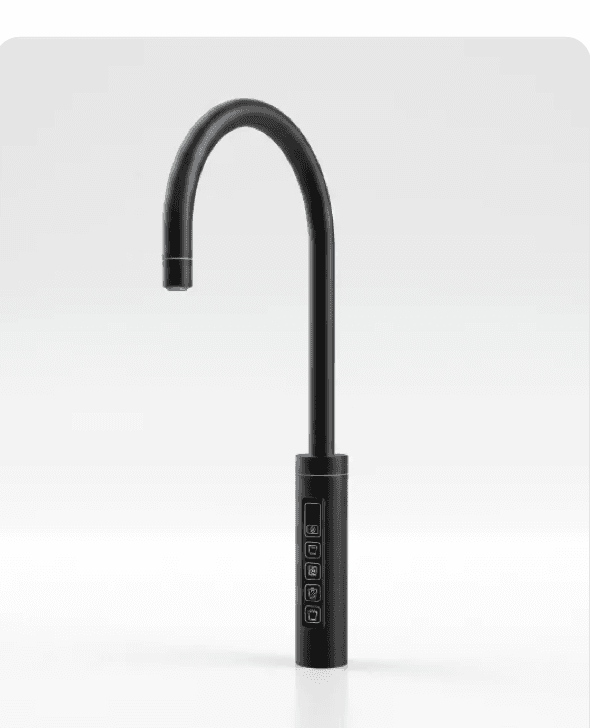
A high-performance, commercial-grade tap delivering instant boiling, chilled and sparkling water with reliability…
View product →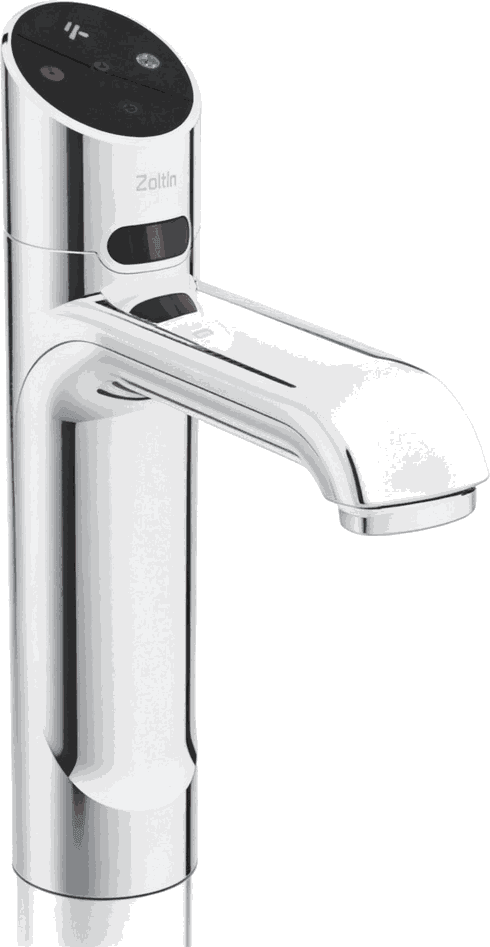
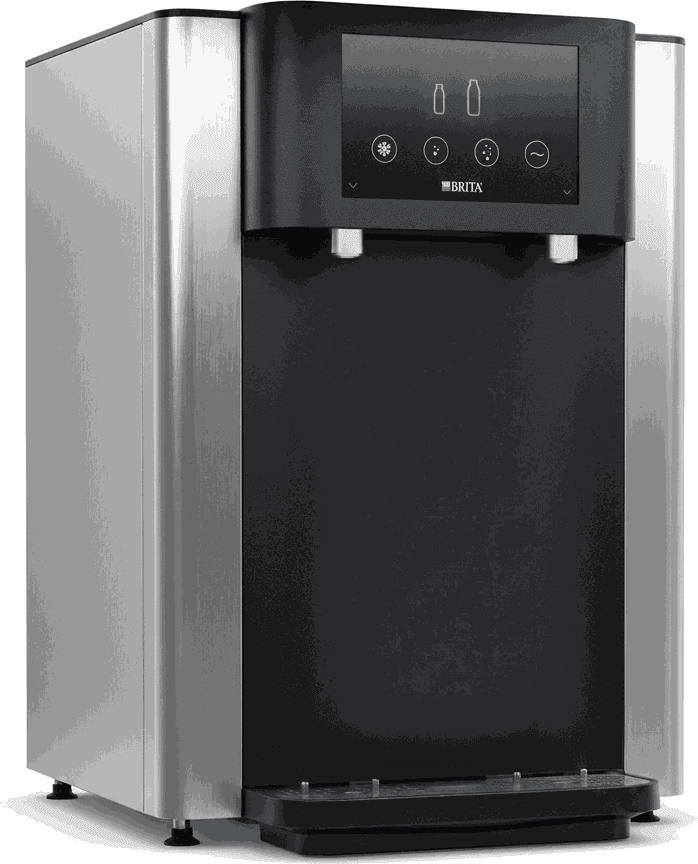
BRITA's most powerful dispenser, delivering still, chilled, semi-sparkling and sparkling water to between 50 and 250…
View product →