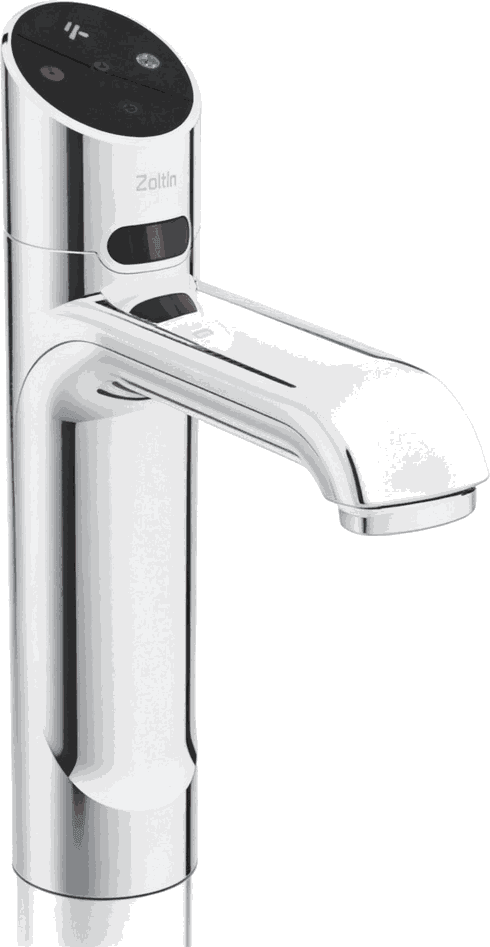
Hydrotap Saudi Arabia: Why the Right Instant Hot Water System Matters
The commercial drinking water landscape across Saudi Arabia is changing. Facility managers, corporate real estate teams and hospitality operators are moving away from bottled water dispensers and traditional point-of-use coolers toward integrated instant hot water systems that deliver boiling, chilled and sparkling water on demand. This shift is driven by operational efficiency, sustainability commitments and the growing expectation among employees and guests for a premium hydration experience.
For businesses evaluating a hydrotap solution in Saudi Arabia, the decision is more complex than selecting a brand and a finish. The Kingdom's water supply infrastructure, regulatory environment and regional quality variations mean that system compatibility, upstream filtration and ongoing maintenance all require careful consideration before installation.
The Regulatory Framework Governing Commercial Drinking Water
Drinking water quality in Saudi Arabia is overseen by the Ministry of Environment, Water and Agriculture (MEWA), which sets the guideline values, while the Saudi Water Authority (SWA) runs the production and transmission of desalinated water. For facility managers specifying instant hot water systems, understanding these benchmarks is useful because incoming water quality directly affects filtration requirements and equipment performance.
Key MEWA values for non-bottled drinking water, as reported in a 2024 study of the national supply by SWA researchers, include:
-
pH: 6.5 to 8.5
-
Residual chlorine: 0.2 to 0.5 mg/L, maintained as a disinfection residual
-
Total dissolved solids (TDS): 100 to 1,000 mg/L
-
Total hardness: a maximum of 300 mg/L, with SWA suggesting a range of 60 to 80 mg/L
These are compliance limits, not performance targets for hot water equipment. Water arriving at a commercial premises can sit anywhere within these ranges, and building storage tanks can change it further.
Why Desalination and Scale Risk Change the Specification
Much of Saudi Arabia's municipal water comes from desalination plants on the Arabian Gulf and Red Sea coasts, and it is carried long distances and blended with groundwater or surface water along the way. That blending means the mineral profile, TDS and chlorine residual at the tap can differ from site to site, which affects both taste and the internal components of instant hot water systems.
Scale formation is a particular concern. Even where total hardness readings fall within the regulatory limit, repeatedly heating water to boiling encourages limescale deposition inside boiling tanks, heating elements and internal pipework. Without appropriate scale control, this reduces output efficiency, shortens equipment lifespan and increases maintenance frequency.
For facility managers, the practical implication is clear. Selecting an instant hot water system based on brand recognition alone, without accounting for upstream filtration compatibility and scale management, is a risk that carries real operational and financial consequences. The right system for a Saudi commercial environment is one that has been specified with local water conditions in mind from the outset.
Understanding the Saudi Commercial Water Environment
Saudi Arabia relies on a combination of desalination plants, groundwater and surface water to meet demand across a growing population and an expanding commercial sector. For businesses specifying instant hot water systems, this translates directly into variability in incoming water quality, and that variability has real consequences for filter selection, equipment performance and maintenance planning.
Characteristics of Municipal and Desalinated Supply
Desalinated water is produced by thermal distillation and reverse osmosis. It is low in dissolved minerals immediately after treatment, and plants add minerals back before it enters the network. By the time water reaches a commercial premises it may also have been blended with groundwater and dosed with chlorine, all of which alter its profile.
The result is that TDS and hardness can vary depending on the source blend and the part of the network a site sits on. Residual chlorine, while necessary for public health protection, affects taste directly, and building storage tanks add their own variation before water reaches the point of use. Carbon filtration deals with taste and odour from chlorine.
Scale-forming minerals present a further challenge. Calcium and magnesium, even within the MEWA maximum of 300 mg/L total hardness, can cause limescale accumulation when water is repeatedly heated to boiling point. Commercial environments with high daily output volumes, such as corporate offices, hotel kitchens and healthcare facilities, are particularly exposed to this risk.
Regional Variation Across the Kingdom
Water quality in Saudi Arabia is not uniform, and regional differences affect how an instant hot water system should be specified and maintained.
-
Riyadh: The capital is fed by pipelines from Gulf coast desalination plants such as Jubail and Ras Al Khair, supplemented by local groundwater. SWA data show the groundwater feeder into Riyadh running at 197 to 281 mg/L total hardness, so scale risk can be significant depending on the blend.
-
Jeddah and Makkah: Supplied mainly by Red Sea desalination plants such as Shoaibah. Desalinated water is typically lower in hardness, making chlorine taste and consistency the more common concerns.
-
Eastern Province: Close to the major Gulf desalination plants, so supply is largely desalinated water.
-
Smaller municipalities and secondary cities: Areas that rely more on groundwater or dam water can carry higher mineral loads and harder water. Pre-installation testing is particularly important in these locations.
Given this regional variation, pre-installation water testing is strongly recommended for any commercial premises in Saudi Arabia before specifying an instant hot water system. A water analysis report covering TDS, hardness, pH, turbidity and chlorine levels provides the data needed to select the correct filtration configuration and scale control approach.
Implications for Filter Selection, Scale Inhibition and Maintenance
The characteristics of Saudi water supply have direct implications for how an instant hot water system should be configured and serviced. A system specified for a market with softer, more consistent water may not perform as intended in a Saudi commercial environment without the right filtration.
Filter selection should account for both chlorine reduction and scale control. Activated carbon filtration addresses taste and odour issues caused by residual chlorine, while scale control, whether through a hardness-reducing filter, scale inhibitor or upstream softening, protects heating elements and internal components from limescale accumulation.
Maintenance scheduling should be based on actual water quality data rather than generic intervals. In high-hardness areas or premises with high daily output, filter change intervals may need to be shortened and descaling carried out more frequently. Facilities that neglect this risk reduced output temperatures, increased energy consumption and, ultimately, premature equipment failure.
For facility managers, working with an installer who understands the Saudi water environment and can provide a site-specific specification is not a premium, it is a baseline requirement for protecting the investment in a quality instant hot water system.
ZIP HydroTap G5: Full Product Profile
The ZIP HydroTap G5 is the current generation of instant hot water system from ZIP Water, an Australian manufacturer with a long-established presence in the premium commercial hydration market. It is widely specified in corporate, hospitality and healthcare environments.
For facility managers evaluating a hydrotap solution in Saudi Arabia, the G5 offers a technically capable platform, but its performance in the Saudi water environment depends heavily on correct filtration configuration and installation by a qualified specialist.
Output Modes and Sizing
The G5 range dispenses boiling and chilled filtered water, with sparkling available on selected models. ZIP sizes each system to the number of users, and boiling and chilled capacities differ between models, so output should be checked against the model's own specification sheet and the site's peak demand before ordering.
Designs and Finishes
The G5 comes in a range of tap designs, from the curved Arc to the Classic and Cube styles, with several finishes to match different interior specifications. The under-counter unit sits in a standard base cabinet, which makes the G5 suitable for retrofit installations as well as new fit-outs. Check current design and finish availability for Saudi Arabia at the time of order.
Filtration and Scale Management
ZIP describes the G5's 0.2 micron MicroPurity filter as certified to reduce up to 99.9% of bacteria, including Cryptosporidium and Giardia, as well as lead and microplastics. Filter life depends on volume and time, and in harder or high-chlorine Saudi supplies it may need changing sooner than on a soft supply.
For Saudi installations where hardness is elevated, additional upstream filtration or a dedicated scale inhibitor may be recommended by the installing engineer following a site survey.
Controls and Energy Features
ZIP lists these features for the G5:
-
A command centre for adjusting the HydroTap's settings
-
Energy-conserving features, including a light sensor, programmable timer and sleep mode
-
CO2 level and filter sensors on sparkling models
These controls are useful for facility managers who want to cut out-of-hours energy use and see when a filter or CO2 cylinder needs changing.
Product Card: ZIP HydroTap G5 Key Points
-
Designs: Arc, Classic, Cube and others
-
Output modes: Boiling, chilled, sparkling (model dependent)
-
Filtration: 0.2 micron MicroPurity, certified to reduce up to 99.9% of bacteria
-
Energy features: Light sensor, programmable timer, sleep mode
-
Sensors: CO2 and filter sensors on sparkling models
-
Saudi water compatibility note: Pre-installation water testing recommended. Additional scale control and upstream carbon filtration advised for high-hardness or high-chlorine supply conditions. Consult a qualified installer before specifying.
-
Warranty: Confirm the warranty period and conditions for Saudi Arabia with your supplier
The ZIP HydroTap G5 is a well-engineered system with strong credentials in premium commercial environments. Its performance in Saudi Arabia, however, is directly tied to the quality of the installation and the suitability of the filtration configuration for local water conditions. Businesses considering the G5 should ensure they are working with an installer who has direct experience specifying and commissioning ZIP systems in the Saudi market, and who can specify the right treatment for your supply as part of the pre-installation process.
For more information on specifying an instant hot water system for your Saudi commercial premises, visit sovereignwater.me or contact the Sovereign Water team directly to discuss your requirements.
BRITA Extra C-Tap: Full Product Profile
The BRITA Extra C-Tap is BRITA's under-counter tap system for workplaces that want several water types from one tap. It suits offices, healthcare facilities, education campuses and commercial kitchens where water quality, hygiene and reliability matter.
Core Specifications and Dispensing Modes
BRITA lists the Extra C-Tap as dispensing unchilled and chilled still water, sparkling and semi-sparkling water, plus instant hot water for drinks such as tea. It is designed for regular use by 20 to 100 people, with a brushed stainless-steel designer tap.
BRITA's product information for the system gives boiler options of 20 or 30 litres per hour and an energy consumption of 2.24 kWh per day, measured with 10 litres of hot and 60 litres of cold water drawn, standby included.
BRITA Filtration Technology
The C-Tap uses BRITA's professional filter cartridges. PURITY C reduces carbonate hardness, helping to prevent limescale in the boiler and pipework. CLARITY Protect is certified to reduce 99.999% of bacteria and 99.95% of cysts, and over 99% of PFAS.
Having a dedicated hardness filter is relevant in Saudi regions where hardness varies between supply sources, because managing scale at the filter protects the heating components and keeps output temperatures consistent.
ThermalGate Hygiene System
BRITA's ThermalGate feature defends the dispenser tap against contamination from external sources, such as sneezing or touching. BRITA describes it as regular heat disinfection of the tap at 120°C. This works without user intervention, which is valuable in facilities where servicing access is infrequent.
For healthcare environments, education campuses and food service operations, this built-in tap hygiene supports good practice alongside regular documented sanitisation.
Safety Features
BRITA lists leakage detection, an emergency shut-off and an anti-scalding feature, and the boiler has sensors to detect overheating.
Product Card Summary
-
Dispensing modes: Unchilled and chilled still, sparkling, semi-sparkling, instant hot
-
Users: 20 to 100 regular users
-
Boiler options: 20 or 30 litres per hour
-
Filtration: PURITY C (carbonate hardness) and CLARITY Protect (bacteria, cysts, PFAS)
-
Hygiene system: ThermalGate heat disinfection of the tap
-
Safety: Leakage detection, emergency shut-off, anti-scalding, boiler overheating sensors
-
Energy consumption: 2.24 kWh per day (BRITA test conditions)
-
Finish: Brushed stainless steel
-
Saudi water compatibility: Hardness filter suits variable municipal hardness; pre-installation testing still recommended
For facilities prioritising hygiene, filtration robustness and long-term operational reliability, the BRITA Extra C-Tap is a technically credible option. Its dedicated hardness filter, combined with the ThermalGate hygiene feature, makes it a strong candidate for environments where water safety is a primary procurement driver.
Section-by-Section Comparison: ZIP HydroTap G5 vs BRITA Extra C-Tap
Selecting between the ZIP HydroTap G5 and the BRITA Extra C-Tap requires a structured evaluation across the factors that matter most in Saudi commercial environments: water quality output, hygiene, maintenance practicality, design flexibility and energy performance. The following comparison addresses each category directly, with a category assessment noted at the close of each section.
Filtration Performance and Water Quality Output
Both systems filter the water before dispensing, but the implementation differs. The ZIP HydroTap G5 uses a 0.2 micron MicroPurity filter that ZIP says is certified to reduce up to 99.9% of bacteria, including Cryptosporidium and Giardia, as well as lead and microplastics.
The BRITA Extra C-Tap pairs CLARITY Protect for bacteria, cysts and PFAS with a separate PURITY C filter that reduces carbonate hardness. For Saudi facilities drawing from harder supplies, this distinction is operationally significant. Scale accumulation within heating elements reduces efficiency and shortens component lifespan, and managing it at the filtration stage rather than through separate softening equipment simplifies the overall installation.
For taste and particulate reduction, both systems perform to a comparable standard. For hardness management within the system itself, the BRITA holds a practical advantage in many Saudi supply contexts.
Category assessment: BRITA Extra C-Tap, on the basis of a dedicated hardness filter relevant to Saudi water conditions.
Hygiene Systems and Maintenance Requirements
ZIP's hygiene approach centres on fine filtration and touch-free and safety features on its taps. BRITA's ThermalGate adds regular heat disinfection of the tap outlet itself, which addresses contamination at the point of dispense. This is useful in environments where the unit may sit idle for extended periods, such as over weekends or during seasonal facility closures, and where documented hygiene compliance is required.
Filter change intervals for both systems depend on usage and incoming water quality, and both manufacturers make cartridge replacement straightforward.
Category assessment: BRITA Extra C-Tap, for built-in heat disinfection of the tap.
Design, Finish Options and Smart Controls
The ZIP HydroTap G5 is widely regarded as a benchmark for commercial hydrotap aesthetics, with a range of tap designs and finishes. Its command centre, energy-saving timer and sleep mode, and sensors on sparkling models make it a natural fit for premium interior specifications where the dispenser is a visible design element.
The BRITA Extra C-Tap offers a clean, professional brushed stainless-steel tap. Its design language prioritises functional clarity over decorative impact, which suits commercial kitchen, healthcare and industrial environments where practicality outweighs interior specification requirements.
For co-working spaces, corporate reception areas and hospitality fit-outs where the dispenser contributes to the overall interior impression, the ZIP G5's design range is a genuine differentiator.
Category assessment: ZIP HydroTap G5, for design range, finish options and controls.
Energy Efficiency and Environmental Footprint
Both systems include energy management. ZIP lists a light sensor, programmable timer and sleep mode; BRITA publishes a measured daily energy figure for the C-Tap under its test conditions. Real consumption depends on how much hot and chilled water each site draws.
Category assessment: Broadly comparable.
Installation Footprint and Commercial Suitability
Both units are designed for under-counter installation with standard plumbing connections. ZIP's range covers a wider variety of tap styles and configurations, while BRITA's single C-Tap format simplifies specification for multi-site rollouts.
Category assessment: ZIP HydroTap G5, for configuration flexibility across diverse commercial environments.
Saudi Application Guide: Which System Suits Your Facility?
Matching the right instant water system to a specific Saudi commercial environment requires an honest assessment of what the facility actually needs, rather than defaulting to the most feature-rich option available. Both the ZIP HydroTap G5 and the BRITA Extra C-Tap are capable, well-engineered products. The question is which one aligns most closely with the operational priorities, water quality profile and interior requirements of a given application.
Where ZIP HydroTap G5 Performs Best
The ZIP HydroTap G5 is the stronger choice for environments where the dispenser is a visible, high-use feature and where design specification matters to the client or occupant experience. Premium corporate offices in Riyadh, Jeddah and the Eastern Province, where workplace design is used to communicate brand values and attract talent, benefit directly from the G5's range of tap designs and finishes, which interior designers and fit-out contractors value.
Hospitality fit-outs, including hotel back-of-house and guest-facing refreshment stations, represent another strong application for the G5. Its controls and safety features align with the operational sophistication expected in four and five-star hospitality environments. Co-working spaces and serviced office operators, where the quality of workplace amenities is a direct commercial differentiator, similarly benefit from the G5's premium presentation.
High-specification reception areas, executive floors and client-facing meeting suites are environments where the ZIP G5's aesthetic credentials justify the investment. In these settings, the dispenser is not simply a utility, it is part of the environment being presented to visitors and clients.
Where BRITA Extra C-Tap Performs Best
The BRITA Extra C-Tap is the more appropriate specification for facilities where filtration robustness, hygiene and long-term durability are the primary procurement criteria. Healthcare facilities, including private hospitals, clinics and medical centres, need to show good hygiene practice, and the ThermalGate heat disinfection of the tap supports that.
Education campuses, from international schools to university facilities, present high-volume usage patterns combined with variable maintenance access, which suits the C-Tap's 20 to 100 user rating and built-in hygiene feature. Large commercial kitchens in hotels, hospitals and institutional catering operations benefit from the dedicated hardness filter, which reduces the maintenance burden on heating components.
Industrial facilities, logistics hubs and manufacturing environments, where the priority is reliable water quality delivery rather than aesthetic presentation, represent a natural fit for the C-Tap's functional design.
Decision Framework for Facility Managers
Use the following criteria to guide system selection:
-
Water quality profile: If your supply is hard, the BRITA's dedicated hardness filter provides a practical operational advantage. If your primary concern is chlorine taste and particulate reduction from desalinated supply, both systems perform to a comparable standard.
-
Usage volume: For very high-volume applications, verify output rates against peak usage requirements for both systems before specifying.
-
Maintenance capability: If your facility has limited access to regular servicing, the BRITA's automatic ThermalGate hygiene feature reduces dependency on manual sanitisation between visits.
-
Interior specification: If the dispenser is a visible design element in a premium environment, the ZIP G5's design range and controls are a meaningful differentiator. If the installation is functional and back-of-house, the BRITA's clean professional aesthetic is entirely adequate.
-
Hygiene requirements: For healthcare and food service, the BRITA's built-in tap disinfection gives stronger support for hygiene practice.
For further guidance on specifying the right commercial water solution for your Saudi facility, Sovereign Water's commercial team can provide a site-specific assessment based on your water quality data, usage profile and installation requirements.
Installation, Compliance and Maintenance in Saudi Arabia
Deploying a commercial hydrotap system in Saudi Arabia is not simply a matter of selecting the right unit and connecting it to the mains. Drinking water quality is governed by MEWA guideline values, and commercial premises, particularly in food service, hospitality and healthcare, are expected to keep water safe at the point of use. Working with a qualified installer is a fundamental requirement for protecting both the investment and the end users.
Connection and Documentation
Installations should use approved materials, suitable backflow protection and pressures within the equipment's rated range, and should follow any requirements set by the local water provider and building owner. In food service, hospitality and healthcare, keeping records of installed equipment, filter changes and water testing is good practice and helps during inspections.
Both ZIP HydroTap and BRITA systems are designed to international commercial standards, and commissioning should be carried out by technicians who can provide test records, filter change logs and handover documentation.
Pre-Installation Water Testing and Pre-Treatment
Saudi Arabia's water supply varies considerably by region. Desalinated supply is typically lower in hardness, while areas drawing more on groundwater or dam water can be much harder and higher in total dissolved solids (TDS).
Sovereign Water specifies the right treatment for your supply before installing any system. Where incoming hardness exceeds approximately 200 mg/L as calcium carbonate, upstream softening or scale inhibition is strongly advisable to protect internal components, extend filter life and maintain consistent water quality. Similarly, where TDS levels are elevated, pre-filtration stages may be required to ensure the primary cartridge performs within its rated parameters. Skipping this step is a common cause of premature filter failure in high-demand Saudi deployments.
Sovereign Water supports clients through the full specification process, from pre-treatment design through to system selection, commissioning and handover documentation.
Ongoing Maintenance Obligations
Both ZIP and BRITA systems require structured maintenance programmes to sustain performance and meet commercial hygiene standards. Filter replacement intervals vary by usage volume and incoming water quality, and in high-traffic Saudi environments regular filter reviews are advisable rather than relying solely on a fixed annual schedule. Descaling protocols are equally important, particularly where pre-treatment is absent or intermittent.
Hygiene checks, including sanitisation of dispensing points and internal flow paths, should be documented and retained. For multi-site operators or high-usage facilities such as hotels, corporate campuses and healthcare premises, a managed service agreement provides the most reliable framework. Sovereign Water offers structured service plans that consolidate filter supply, scheduled maintenance visits and compliance documentation across multiple locations, reducing administrative burden and ensuring no site falls outside its service window.
Frequently Asked Questions: Hydrotap Systems in Saudi Arabia
Are ZIP HydroTap and BRITA systems compatible with desalinated water supplies?
Yes, both systems are compatible with desalinated water, which is the main municipal supply in cities such as Riyadh, Jeddah and Dammam. However, desalinated water in Saudi Arabia is not uniform in quality. Blending with groundwater, distribution network conditions and building storage can all affect the final water quality at the point of use. A pre-installation water test is the most reliable way to confirm that the selected system and filtration specification are appropriate for the specific supply at a given site.
What filter type is recommended for high-hardness water, and how often should filters be replaced in high-usage environments?
For high-hardness supplies, a filter that reduces hardness or inhibits scale is recommended, either as a cartridge in the system or as a dedicated upstream stage. BRITA's PURITY C filter is designed for this job. ZIP HydroTap systems also support pre-filtration configurations, though the specific cartridge selection should be confirmed against the site's water analysis results.
In high-usage commercial environments, filter replacement should be assessed against actual throughput rather than calendar schedules alone. A busy hotel or corporate dining facility may need filter changes much more often than the annual interval often quoted for light office use. Sovereign Water advises clients to set usage-based replacement schedules as part of their commissioning documentation.
Do instant hot water systems require registration or approval in Saudi Arabia?
We are not aware of a product registration process that applies specifically to hydrotap units. Commercial fit-outs in food service, healthcare and hospitality should still keep records of installed equipment, filter maintenance and water quality testing, and follow the requirements of their sector regulator and building owner. Sovereign Water provides clients with commissioning documentation and can advise on sector-specific requirements for the installation site.
Which system is the better choice for a Saudi commercial deployment?
Neither system is universally superior, and the right choice depends on the priorities of the specific project. ZIP HydroTap is the stronger recommendation where aesthetic flexibility, premium finishes, controls and compact under-counter installation are the primary considerations. Its range of tap designs makes it particularly well suited to prestige corporate, hospitality and retail environments where the dispensing point is a visible design element.
BRITA is the stronger recommendation where filtration, ThermalGate hygiene, robustness and long-term reliability are the deciding factors. Its dedicated hardness filter and built-in tap disinfection make it a compelling choice for healthcare, education and large-scale food service deployments.
Sovereign Water works with both product families and can provide an independent specification recommendation based on a site's water quality profile, usage volume, regulatory context and commercial objectives.
Frequently Asked Questions
Can Sovereign Water supply and install hydrotap systems for projects based in Saudi Arabia?
Sovereign Water can advise on system specification, pre-treatment requirements and documentation for Saudi Arabia deployments. Clients are encouraged to contact the team directly to discuss project scope, site water quality data and installation timelines. Early engagement allows for accurate specification and avoids delays during the commissioning phase.
How does incoming water hardness in Saudi Arabia affect the choice between ZIP and BRITA systems?
High hardness accelerates scale formation within heating elements and filtration components, which can reduce system performance and shorten component life if not addressed. Both ZIP and BRITA systems can be configured with appropriate pre-treatment to manage hardness, but the specific approach should be determined following a water analysis. BRITA's dedicated hardness filter gives it a marginal advantage where hardness is the main concern, though ZIP systems with correctly specified upstream treatment perform reliably in comparable conditions.
What documentation should a facility manager request at the point of commissioning a hydrotap system?
At commissioning, facility managers should request a copy of the pre-installation water test results, the system installation record, the filter replacement schedule based on actual usage projections, and the manufacturer's warranty documentation. For regulated sectors, a hygiene maintenance log template should also be set up at this stage. Sovereign Water provides a structured commissioning pack as standard for all managed installations, so clients have the documentation required for both internal records and inspections.
Sources
- Al-Hamzah and Fellows (2024), water quality across the Saudi desalination and transmission system, Water 16, 1810 (SWCC)
- ZIP Water: HydroTap technology
- BRITA: Extra C-Tap
- BRITA: Extra C-Tap product information (PDF)
- BRITA: Top Pro (ThermalGate 120°C)
Need Support With This?
Contact Sovereign Water to discuss how we can help. Get in touch.
Products mentioned in this article
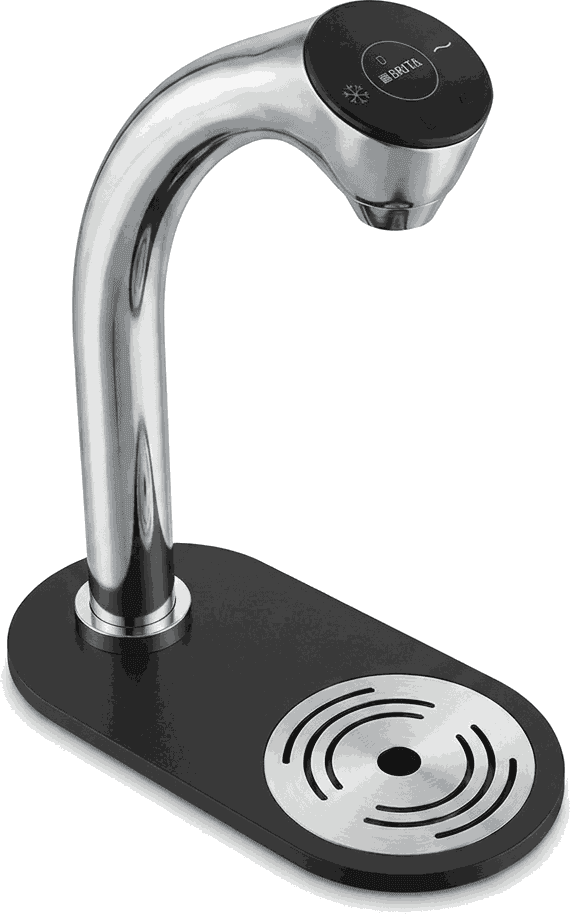
BRITA's signature undercounter dispenser delivers up to five water types from a single brushed stainless steel tap…
View product →