When businesses in the Kingdom of Saudi Arabia evaluate their water quality needs, they often encounter two terms that sound similar but represent different approaches: filtration and treatment. Understanding the distinction between these processes can mean the difference between meeting regulatory requirements and falling short, between protecting expensive equipment and facing costly repairs, and between operational success and preventable failures.
Commercial water filtration and treatment serve complementary roles in delivering quality desalinated water for business operations. While filtration focuses on physically removing particles and contaminants from water, treatment encompasses a broader range of chemical and advanced technological processes designed to alter water chemistry and meet specific quality standards. For businesses ranging from small office buildings to large industrial facilities, selecting the right combination of these technologies has become increasingly critical in supporting the Kingdom’s Vision 2030 water sustainability goals.
Understanding Commercial Water Filtration
Commercial water filtration operates on a straightforward principle: physically removing unwanted particles and contaminants from water as it passes through various filter media. This mechanical process captures sediment, rust, debris, and other particulates that can compromise water quality or damage equipment.
Filtration systems come in multiple configurations, each designed for specific particle sizes and contamination types. Activated carbon filters excel at removing chlorine, organic compounds, and chemicals that affect taste and odor. These filters work through adsorption, where contaminants bond to the carbon’s extensive surface area. Sediment filters handle larger particles like sand, silt, and rust, protecting downstream equipment from damage and extending the lifespan of more sophisticated treatment components.
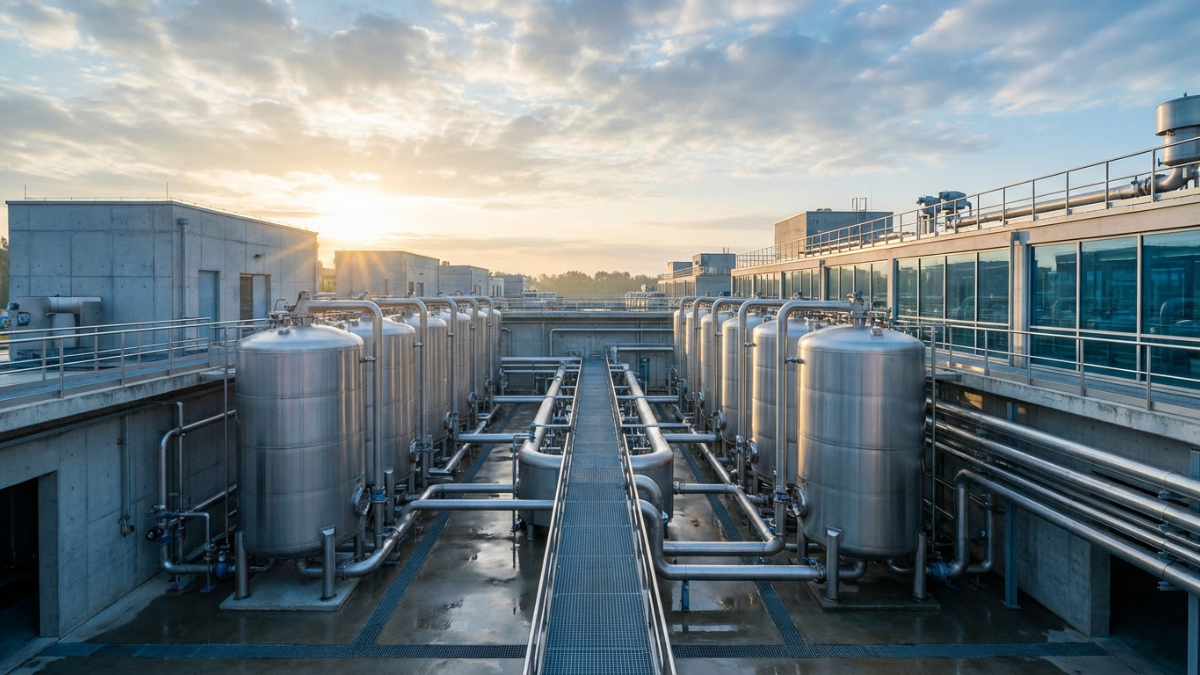
For businesses in Saudi Arabia, the scale of filtration systems varies dramatically based on usage demands. A small office building might need filtration capacity measured in gallons per minute, while manufacturing facilities require systems that maintain consistent performance under much higher flow rates. The physical infrastructure supporting these systems must accommodate everything from compact under-sink units to room-sized filter arrays, particularly important given the Kingdom’s focus on water conservation and efficiency.
Commercial Water Treatment: Beyond Physical Filtration
Water treatment extends beyond simple particle removal to alter water chemistry through chemical processes, advanced technologies, and specialized equipment. Treatment addresses dissolved contaminants that filtration alone cannot remove, including minerals, salts, heavy metals, and microorganisms.
Reverse osmosis systems represent one of the most effective treatment technologies available for commercial applications, building on Saudi Arabia’s global leadership in desalination technology through SWCC (Saline Water Conversion Corporation). These systems force water through semi-permeable membranes under high pressure, typically operating between 150 and 220 PSI. The process achieves remarkable results, with rejection rates reaching 90 to 95 percent for particulate matter. Advanced commercial RO systems can remove up to 99 percent of total dissolved solids, simultaneously eliminating salts, minerals, heavy metals, and organic chemicals.
Ultraviolet disinfection provides chemical-free pathogen control by exposing water to UV light that damages microbial DNA, preventing reproduction and eliminating disease-causing organisms. This treatment method has gained widespread adoption in commercial settings because it adds no chemicals, produces no byproducts, and requires minimal maintenance compared to chemical disinfection alternatives.
Water softening through ion exchange removes calcium and magnesium ions that cause scale buildup in pipes, boilers, and equipment. For businesses operating commercial kitchens, laundries, or manufacturing processes, water hardness directly impacts operational costs through increased energy consumption, reduced equipment efficiency, and higher maintenance requirements.
Deionization takes water purity to another level by removing virtually all mineral ions, producing ultra-pure water required for specialized applications. Industries like electronics manufacturing and pharmaceutical production depend on deionized water to prevent contamination in sensitive processes.
Customization for Industry-Specific Requirements
Unlike municipal water systems that follow standardized regulations, commercial water treatment systems are highly customizable and tailored to specific business needs. This flexibility allows businesses to address unique challenges and meet industry-specific standards that often exceed municipal requirements, aligning with the Kingdom’s commitment to excellence in water management initiatives.
Healthcare facilities require water treatment that eliminates pathogens, prevents bacterial growth in distribution systems, and meets stringent infection control standards set by the Ministry of Health. Dialysis centers need particularly rigorous treatment to protect vulnerable patients from waterborne contaminants that healthy individuals might tolerate.
Pharmaceutical manufacturers must comply with Good Manufacturing Practice regulations, which mandate specific water quality standards for drug production. These operations typically integrate multiple treatment technologies to achieve the necessary purity levels, with continuous monitoring systems ensuring consistent compliance.
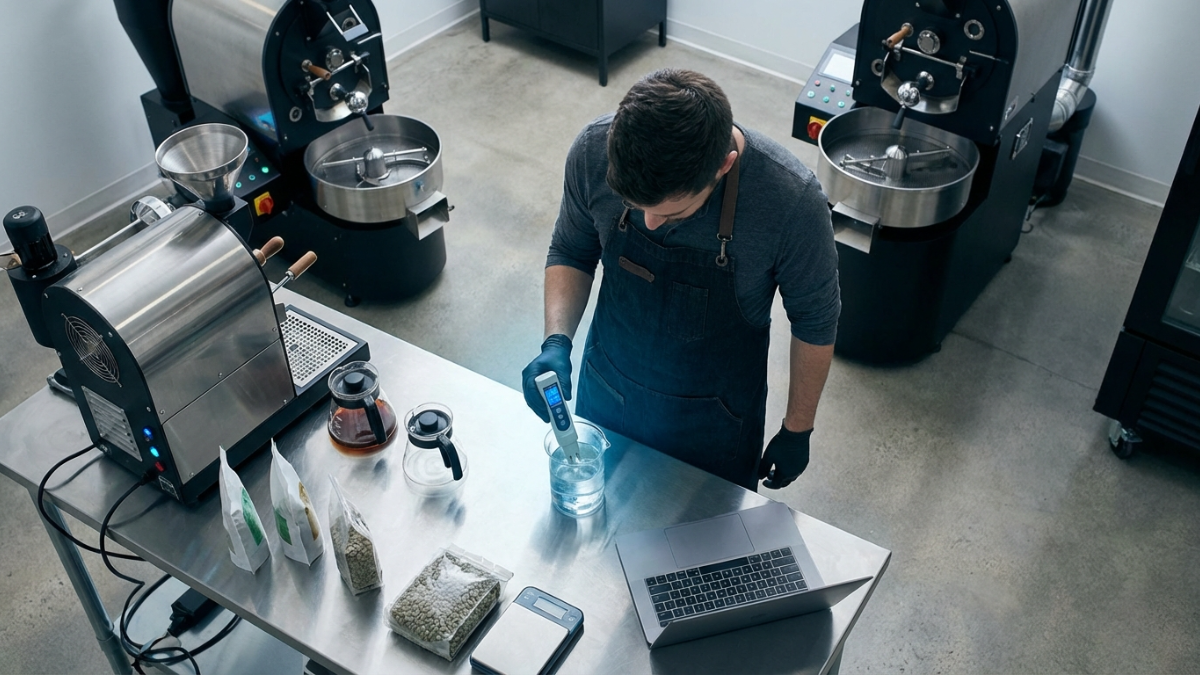
The food and beverage industry faces unique challenges where water quality directly affects product taste, appearance, and shelf life. Breweries and bottling operations invest heavily in treatment systems that remove minerals and chemicals that could alter flavor profiles or cause discoloration. Additionally, these facilities must prevent microbial contamination that could spoil products or pose health risks to consumers.
Electronics manufacturing requires ultra-pure water to prevent defects in sensitive components, particularly relevant for NEOM’s advanced technology initiatives. Even trace contaminants can cause failures in semiconductor fabrication or damage to precision electronic assemblies. These operations typically employ multi-stage treatment combining reverse osmosis, deionization, and UV treatment to achieve the necessary purity levels.
The hospitality industry uses commercial water treatment to enhance guest experiences and protect infrastructure investments. Hotels and resorts implement treatment systems that improve water aesthetics, prevent scale damage to expensive fixtures and appliances, and reduce maintenance costs across large properties.
Integrated Treatment Approaches
Modern commercial water treatment rarely relies on a single technology. Instead, businesses implement integrated systems that combine multiple processes to achieve optimal results. This multi-barrier approach provides redundancy, addresses different contamination types, and delivers consistent water quality under varying conditions.
A typical integrated system might begin with sediment filtration to protect downstream equipment, followed by activated carbon filtration to remove chlorine and organic compounds. Reverse osmosis then removes dissolved solids and contaminants, while UV disinfection provides final pathogen control. Additional components like water softeners, pH adjustment systems, or specialized filters address site-specific challenges.
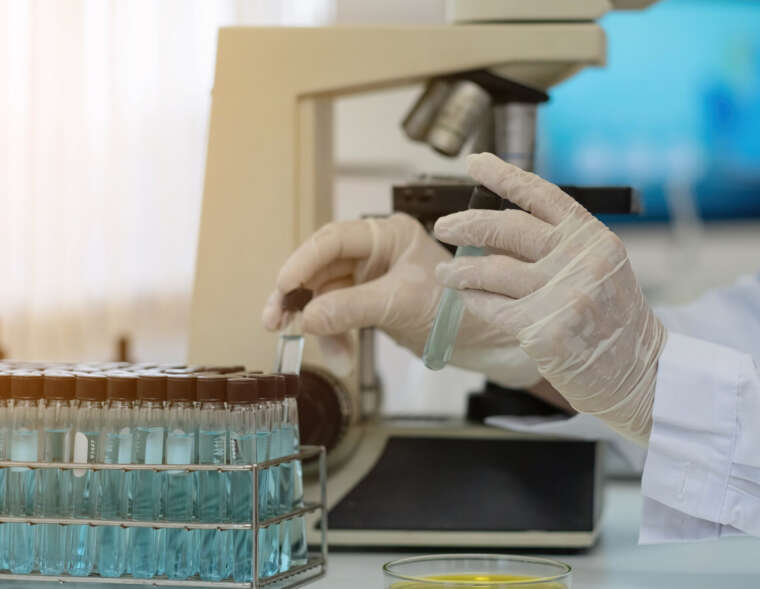
The sequence and combination of technologies depend on incoming water quality from municipal water supply, end-use requirements, and regulatory compliance needs. Regular water testing informs system design and helps businesses optimize their treatment approach over time as conditions change or operations expand.
Industry Perspective from Sovereign Water
The commercial water treatment sector continues adapting to increasingly sophisticated business requirements and tightening regulatory standards. We observe businesses moving away from one-size-fits-all solutions toward precisely engineered systems that address their specific operational challenges while providing room for future growth.
The distinction between filtration and treatment matters more than many businesses initially realize. Companies that understand these differences make better investment decisions, avoid costly over-engineering or under-specification, and build water quality programs that support long-term success. As water quality concerns intensify and industries face greater scrutiny over their water use and discharge, having the right combination of filtration and treatment technologies becomes not just an operational consideration but a strategic business advantage aligned with the Ministry of Environment, Water and Agriculture’s conservation initiatives.
Frequently Asked Questions
What is the main difference between water filtration and water treatment?
Water filtration physically removes particles, sediment, and contaminants through mechanical processes, while water treatment involves chemical and advanced technological processes that alter water chemistry to remove dissolved contaminants, kill pathogens, and meet specific quality standards. Filtration is one component of a broader treatment strategy.
How much water can commercial treatment systems process?
Commercial water treatment systems vary significantly in capacity based on business needs. Small office systems might process hundreds of gallons daily, while advanced industrial systems can handle up to 40,000 gallons per day. System sizing depends on peak demand, application requirements, and future growth projections.
Do all businesses need both filtration and treatment?
Not necessarily. Water quality requirements vary by industry, application, and location. Some businesses with minimal quality requirements may only need basic filtration, while others in highly regulated industries like pharmaceuticals or healthcare require comprehensive treatment systems combining multiple technologies. A professional water quality assessment determines the appropriate approach.
How effective is reverse osmosis for commercial applications?
Reverse osmosis is highly effective for commercial use, achieving 90 to 95 percent rejection rates for particulate matter and removing up to 99 percent of total dissolved solids. RO systems eliminate salts, minerals, heavy metals, and organic chemicals, making them suitable for applications requiring high-purity water.
What industries benefit most from specialized water treatment?
Healthcare facilities, pharmaceutical manufacturers, food and beverage producers, electronics manufacturing, and hospitality operations benefit significantly from specialized treatment systems. Each industry has unique water quality requirements driven by regulatory compliance, product quality concerns, equipment protection needs, or customer satisfaction considerations.
Learn more about how Sovereign Water delivers reliable water treatment solutions backed by industry expertise at sovereignwater.com